Mid-90s Metal: What the 1994 Quarter Tells Us About Modern Coinage
Coin production in 1994 was conducted at three primary facilities.
The mints in Philadelphia and Denver provided for the needs of cash circulation.
The San Francisco facility specialized in producing collector sets of Proof quality.
The total 1994 quarter output exceeded 1.7 billion units, characterizing this year as a period of high production activity.

Mint Facility | Mint Mark | Mintage | Purpose |
Philadelphia | P | 825,600,000 | Circulation |
Denver | D | 880,034,110 | Circulation |
San Francisco | S (Clad) | 2,292,710 | Collector Sets |
San Francisco | S (Silver) | 785,329 | Collector Sets |
Parameters and Material Composition
Quarters dated 1994 were produced in two composition variants depending on the strike type.
Standard coins intended for circulation feature a copper-nickel cladding.
The inner core consists of pure copper, accounting for 91.67% of the total weight.
The outer layer represents an alloy of 75% copper and 25% nickel.
The mass of a standard coin equals 5.67 grams.
Silver versions from Proof sets contain 90% silver and 10% copper.
The mass of a silver quarter equals 6.25 grams with an identical diameter of 24.3 millimeters.
Market Value Based on Condition
The massive mintage results in circulating specimens having no collector value above face value.
The price begins to increase exclusively upon reaching the MS67 grade on the Sheldon scale.
Sales statistics show a significant gap in value between preservation levels.
Condition | 1994-P | 1994-D | 1994-S Silver |
MS65 / PR69 | $5 | $5 | $25 |
MS66 / PR70 | $15 | $18 | $75 |
MS67 | $80 | $110 | — |
MS68 | $850+ | $1,200+ | — |
Record Auction Outcomes
Analysis of specialized auction data reveals peak value figures for rare conditions.
In 2019, a 1994-D specimen in MS68 grade realized $1,140 at a Heritage Auctions event.
For Philadelphia coins, the record is fixed at $920 for an MS67+ grade.
Silver Proof versions in perfect PR70 Deep Cameo condition trade within a range of $150 to $220.
Observed statistics indicate a shortage of coins in MS68 condition, constituting less than 0.001% of the total volume of verified lots.
Price Dynamics in Recent Years
The value of 1994 quarters is subject to annual fluctuations at a level of 3-5%.
An increased interest in MS67 grade coins has been recorded over the last five years.
The average price for such specimens grew by 12% during the period from 2019 to 2024.
Coins in MS64 condition and below demonstrate zero growth dynamics.
Proof quality specimens featuring traces of patina or oxidation lose up to 15% of their value annually in the absence of proper storage conditions.
Visual Characteristics and Minting Defects
Examining the surface of 1994 coins allows for identifying signs of die wear typical for that period.
Microscopic lines radiating from the center to the edges are frequently encountered on the obverse.
The reverse is characterized by high definition of the eagle's plumage on early batch coins.
Common minting errors include:
Minor image offsets (Off-center)
Traces of die clashes
Weak strikes of individual lettering details
Serious defects increasing the coin's value by more than 10 times occur extremely rarely.
Comparative with Adjacent Years
Comparing the 1994 issue with the 1993 and 1995 periods shows stability in production volumes.
The 1994 mintage exceeds 1993 figures by 300 million units.
Increasing the supply volume reduces the probability of finding coins in superb condition among random finds.
1995 quarters were produced with similar characteristics, maintaining the same price hierarchy for high grades.
Investment Potential and Liquidity
The liquidity of 1994 coins is limited to a narrow segment of collectors forming complete date sets.
Selling an MS68 grade specimen may take from three to six months on specialized platforms.
Investing in coins below the MS67 grade is deemed impractical by experts.
The primary risk involves the potential discovery of new batches of unopened bank bags.
The appearance of a large number of MS67 condition coins on the market would lead to an immediate price drop of 25-40%.
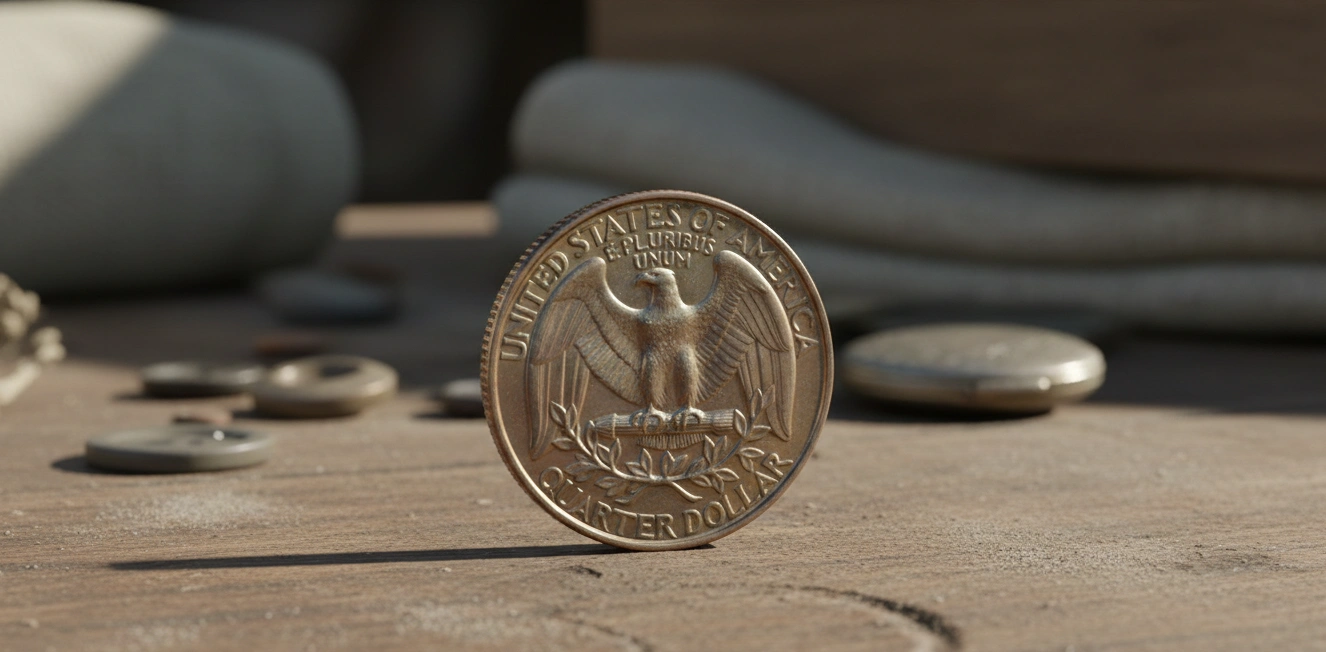
Professional Appraisal Algorithm
A standardized inspection protocol is applied when determining the value of a specific specimen.
Identifying the mint mark located to the right of Washington's hair ribbon
Verifying the weight on digital scales with 0.01-gram increments
Examining the coin fields under ten-fold magnification for marks
Analyzing the sharpness of the relief on the Liberty inscription
Evaluating the preservation of the original mint luster
Searching for signs of cleaning or artificial surface improvement
Population Report Statistics
Data from leading certification centers allows for evaluating the rarity of high conditions.
The PCGS registry lists over 500 specimens of 1994-P in MS67 grade.
The number of 1994-D coins in an identical grade totals approximately 420 units.
For the MS68 condition, figures drop to isolated cases for each mint facility.
This statistics confirms the difficulty of obtaining the highest grade for coins of this year.
List of Key Features
Presence of a P or D letter on the obverse
Copper-nickel or silver composition depending on the type
Weight of 5.67 grams for the copper-nickel version
Weight of 6.25 grams for the silver version
Surface condition without visible scratches
Sharpness of lines in the portrait's hairstyle
Maintenance of mirror-like surfaces for Proof coins
Absence of circulation marks on the edge
Sources of Value Formation
Market quotes are based on aggregated data from US auction houses.
Only completed transactions with confirmed payment are taken into account.
Non-auction sales between private individuals are not included in official price statistics.
The calculation methodology involves excluding extremely high and low values to obtain an objective median.
Regular updates of PCGS and NGC registries serve as the basis for adjusting price guides.